Use the below links to display a list of men by surname that appears on the War Memorial.
| A | B | C | D | E | F | G | H | I | J | K | L | M | N | O | P | Q | R | S | T | U | V | W | X | Y | Z |
Or by date of death (will not display all names).
| 1914 | 1915 | 1916 | 1917 | 1918 | 1919 | 1920 | 1921 | 1922 | 1923 |
Charles Caney
06/08/1897 - 29/08/1918
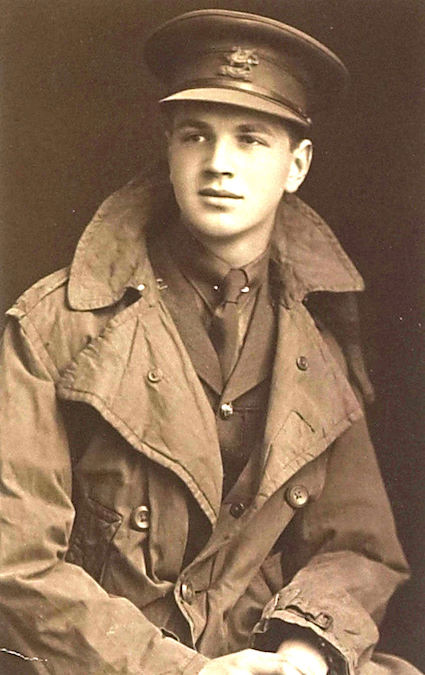
Source: Tonbridge School
Other Memorials: Dulwich College
Place of birth: Camberwell, London
Last known address in Bromley: 50 Cambridge Road
Last known address in Bromley: 50 Cambridge Road
Military information
Regiment/Service: The Buffs (East Kent Regiment)Battalion/Ship: 6th Bn
Rank: Lieutenant
Number: Unknown
Family information
Parents: Charles Thomas & Florence Amelia Caney (nee Filler)Parents' occupation: Auctioneer
Siblings: None
Census information
1901Address: 50 Cambridge Road
1911
Address: 50 Cambridge Road
Extra details
Charles was born on 6th August, 1897 and baptised at St John the Divine, Kennington on 17th December 1897. The family were living at 8 Camberwell Green, Charles Snr was an estate agent. Charles, who was known as "Bobs" was the only child of Charles Thomas and Florence Amelia Caney.
He attended Quernmore School, Bromley before attending Dulwich College as a day boy from 1910 to 1911. From an early age he showed considerable literary ability and taste and gained the first prize for Literature in the Lower School.
He entered Tonbridge School in September 1911. Here he also gained School Literature prizes in the Lower and Middle School. Even in the trenches he was seldom without his Browning or some other favourite poet.
With a view to becoming a Barrister he was to have gone to Oxford, and had been entered for Lincoln College, but the War altered the plans for his future, and joining the Army Class from the Upper Fifth in January 1916, he passed into the R.M.C., Sandhurst, at the Summer Examination and left in July 1916.
At Sandhurst he did well, and passing out at the head of the list for the Regiment he had chosen, The Buffs (East Kent Regiment) receiving a commission on May 1st 1917.
After a short period at Dover he joined the 6th Battalion of his regiment in France, and the Adjutant of the Base Depot through which he passed, in a letter written on seeing the announcement of his death, told of the great impression made by his "wonderful personality and cheery demeanour" where the attitude of many was so different, and wrote: - "The few days that he spent at my Depot he was so entirely different from the majority of the passers-by that the contrast he formed has remained in my memory ever since. . . . I knew he was to do great things."
His own letters bear eloquent testimony to his devotion to his parents and his great love for his School; those of his friends to his unfailing cheeriness, the cleanness of his life and speech, his courage and devotion to duty, and the way in which he won friendship and affection wherever he went.
He came unscathed through much fighting in 1917, and after he was home on leave at Christmas, until he was wounded on March 26th 1918, at Aveluy Wood, near Mesnil, under circumstances that led to the award of the M.C. The following account of his gallant action appeared in the Gazette : - "The post of which he was in command was heavily attacked by the enemy. He held his ground although completely surrounded, until he was relieved by a counter-attack. He inflicted heavy casualties on the enemy and captured seven prisoners, and although badly wounded at the beginning of the engagement continued to encourage his men and direct their fire. He refused to leave his men until touch had been established on the flanks and he had been relieved by another officer. He set a magnificent example of courage and determination under most difficult conditions." He had also captured a machine gun, but he received a bullet through the shoulder, and the wound was far more serious than he would ever acknowledge.
After a period in hospital in London and then in a convalescent home at Brighton he was sent out to a different Battalion, the 7th, in which his value was soon recognised. In the course of the victorious offensive in August his Company Commander was wounded at Mametz on the 23rd and handed over the command to him. When they had reached the Montauban-Bazentin-le-Petit road the Germans counter-attacked and he was mortally wounded on the 26th and died at the Casualty Clearing Station three days later, August 29th 1918.
The officer who took over command of the Company wrote that his devotion to duty and bravery had been "an inspiration to the whole Company," and that he had shown "complete disregard of danger, encouraging and directing the men until severely wounded in the chest by a sniper." His Company Commander wrote that, though not present at the time, he knew from others how well Lieut. Caney had done, and said: - "He was simply splendid. Fear was utterly unknown to him. The men loved him. . . . After he was hit they told me he was simply wonderful and, although he knew that he was for it, kept as cheerful up to the last as he always was."
His Company Commander in the 6th wrote: - "He was in my Company in March last when he got the M.C., and did awfully well just after I was wounded. In fact he held the whole show together on his own, when the other officers had been killed. He did good work when we were in the Fleurbaix sector in February-March, and was always keen on going right up to the Hun wire on patrol. In fact I went out once or twice to cover him with a machine gun and two men, in case he needed assistance. I feel that we've lost one of our best and pluckiest men."
A Chaplain wrote: - "We were all most sorry in the 6th when we heard he was not coming back to us. . . . We shall never get another quite like Bobbie, for he combined in a wonderful way the utmost gallantry and a naturally artistic temperament that caused him to love all that is beautiful, so that he had the making of a splendid soldier and was at the same time a most delightful companion."
Five months after Bobs' death his father died aged only 49. His mother rented out her house as "her health not being good enough for her to live alone" and travelled between friends and family. She was still doing this in 1939 as the Register shows her occupation a "Travelling, Private Means". She died in 1951 aged 84.
Thank you to Dulwich College and Tonbridge School for their assistance.
Is there information missing here? If you can help, please email contact@bromleywarmemorial.org.uk.